6b04
SCIENCE
2026 June 8, 9
Level: Medium
Lab-Grown Eats: Promise or Problem?
by Christine Bedwell
A closer look at the science and potential effects of lab-grown foods
8
The present rise in the world population and more frequent extreme weather events put global food security at risk. Produced from plant and animal stem cells grown in controlled environments, lab-grown food could provide sustainable, efficient and safe nutrition for a hungry planet.
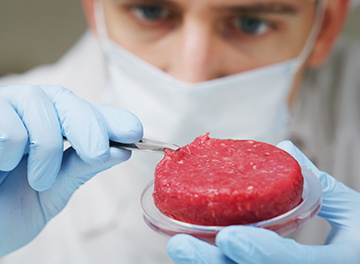
To create lab-grown meat, scientists put animal cells into bioreactors, which act like an animal’s body, providing heat and necessary nutrients. The multiplying cells develop into muscle and fat and are then shaped into types of meat like steak, boneless chicken or ground meat. For lab-grown dairy products, the genes for cow milk proteins are put into yeast, which converts the sugars into dairy proteins. These proteins are later combined with other ingredients to create a range of dairy products.
These innovative production procedures have the potential to improve animal well-being, increase food safety and nutrition and use fewer resources. A small sample of muscle tissue is taken from a living animal to produce lab-grown meat, saving the lives of animals. Additionally, lab-grown food is often safer because it is produced in a clean laboratory and can be engineered to include more nutrients than regular food.
|