







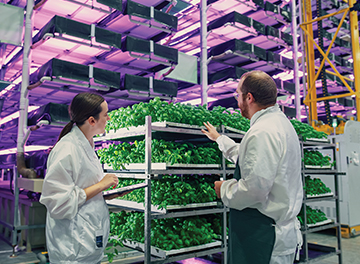
by Javeria Khalid / © 2025, Fast Company. Mansueto Ventures, LLC. Distributed by Tribune Content Agency, LLC.
1
When Sky Kurtz set out to grow produce in the desert via vertical farming in 2016, laying the groundwork for what became Dubai-based ag-tech startup Pure Harvest Smart Farms, “People thought we were crazy,” he says. “I was fearful I would never get off the ground.”
But Kurtz’s [plan] came at a time when the United Arab Emirates (UAE) was beginning to take the idea seriously and companies like Pure Harvest began cropping up. Over the past nine years, Pure Harvest Farms has become one of the sector’s biggest players. It has raised more than $450 million in funding, according to market analysis company PitchBook, and grows an array of crops that includes tomatoes, green vegetables and berries in temperature-controlled facilities. With farms strategically located throughout the UAE, the company boasts the capacity to produce over 12 million kilograms of crops annually.
Unlike other ag-tech companies which were designed for temperate climates, Pure Harvest developed technologies specifically built to withstand the harsh climates of the Middle East. Unlike other ag-tech companies that focus on niche produce and cater to premium markets, Pure Harvest sells a wide range of produce and supplies to major supermarket chains across the country.
A hot market
The UAE has rapidly become a global hub for ag-tech innovation, attracting diverse companies from around the world. Global demand for efficient indoor food production is surging, given climate change disrupting traditional agriculture as water sources dry up and temperatures rise. In the United States, the Colorado River—responsible for irrigating 15% of the nation’s farmland—is drying up rapidly. Meanwhile, across the Horn of Africa, prolonged droughts are responsible for more than 23 million people experiencing severe hunger.
The Middle East, particularly the UAE, experiences brutal heatwaves, with less than 1% of the land suitable for agriculture. This makes the country heavily dependent on food imports, with over 80% of its food coming from abroad. Producing locally not only reduces the costs and carbon emissions associated with transportation but also makes the UAE less reliant on imports.
Visit Fast Company online.